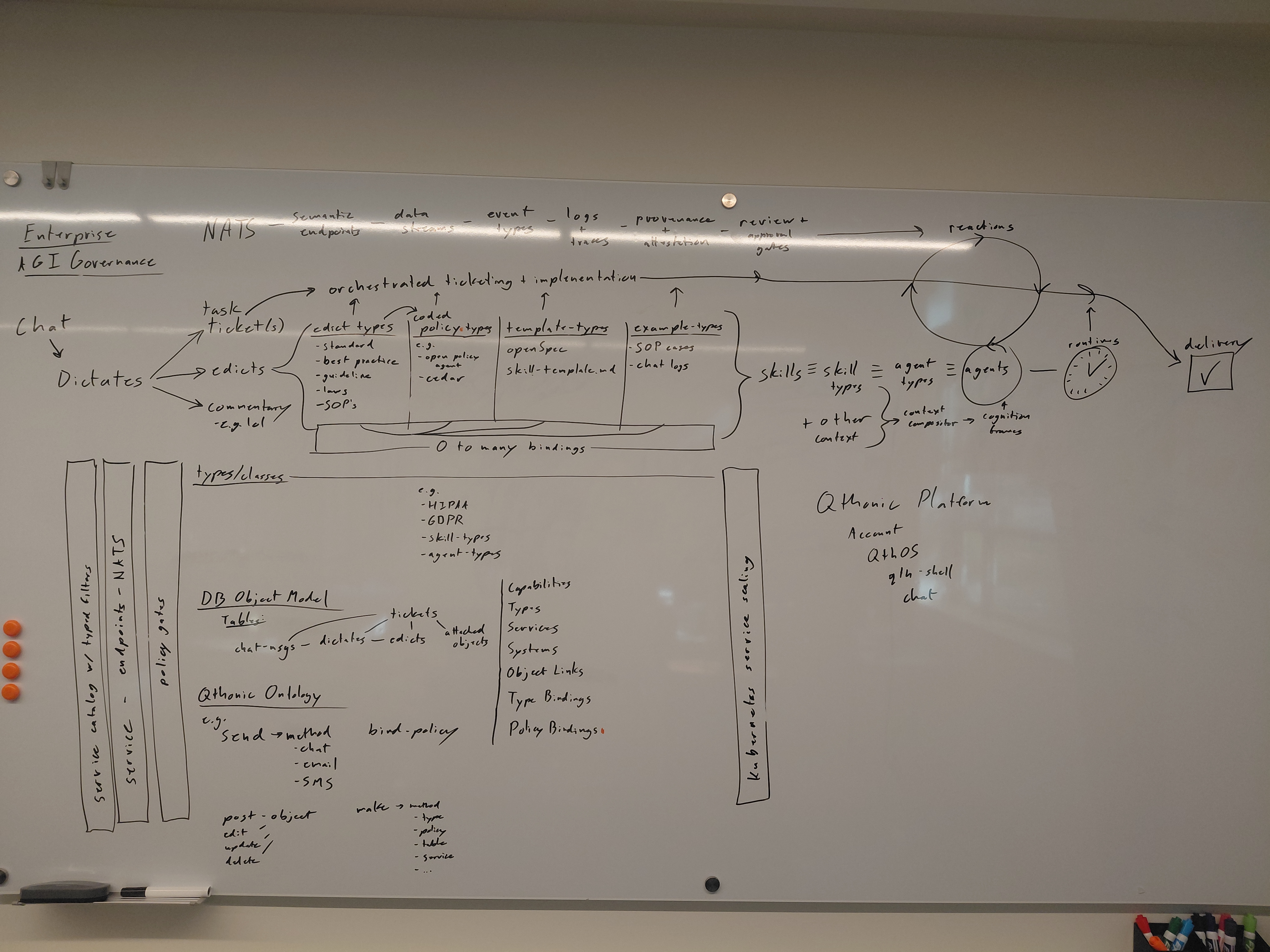
The ticket is the durable coordination record. Messages notify; workers execute. An atomic claim establishes the current attempt under the assigned identity, bounded by a lease and generation. A stale worker must be rejected at effect admission. A new attempt preserves prior artifacts, pending operations and interrupt-return context.
Dependencies form a constrained work graph: edges name the required outcome, cycles are rejected where they would deadlock readiness, and failed or cancelled prerequisites require an explicit disposition. Typed links to sources, edicts, decisions, artifacts, operations and evidence add context without all becoming blocking dependencies. A parent ticket coordinates child tickets; each child has its own assignee and acceptance.
Reaction rules match events. Routines define recurring occurrences. Both admit work through the same policies, with stable trigger identities, overlap rules and bounded concurrency. Assignment, readiness, lease, priority and resource budget are evaluated from authoritative state; queue delivery is not a claim.
Different tickets can contend for the same object. The resource owner applies atomic revision checks or suitable transactions/locks. An operation binds tenant, caller, method, target and argument digest. If a reply is lost after sending, preserve UNKNOWN and reconcile that operation before considering replay.
These are reference contracts. NATS consumers provide delivery mechanics; transaction isolation provides database concurrency tools. Neither by itself implements ticket custody or prevents duplicate external effects.